
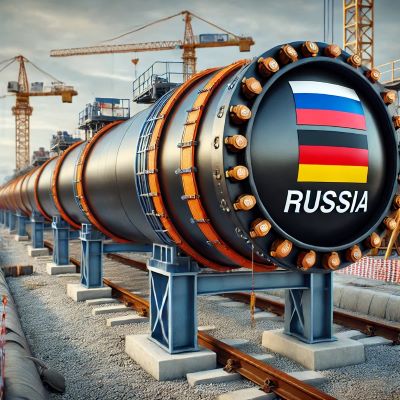
In recent decades, Russian influence on the energy and environmental policies of Europe and the United States has become increasingly significant in the international context. Russia, through a “soft power” strategy that avoids direct military conflict, has expanded its influence through a set of financial and propaganda actions. This approach is clearly manifested in the energy dependence of many European countries, such as Germany, Italy, and Hungary, which are intrinsically linked to their relationship with Russia, primarily through natural gas imports. For example, Germany has relied heavily on Russian gas, leading the government to adopt more conciliatory stances towards Moscow’s policies, especially in the context of international sanctions.
Furthermore, Russia’s covert funding of organizations that oppose energy technologies, such as fracking, illustrates a complex backdrop of interests surrounding the energy market. Non-governmental organizations (NGOs) have received funds from Russian sources and promoted agendas focused on opposing fracking and other forms of energy production. Greenpeace, in particular, has been accused on several occasions of being part of a broader strategy that, by opposing certain local energy technologies, indirectly favors dependence on imported fossil fuels, such as Russian gas. A notable example occurred in 2014 when European and American legislators pointed out that Greenpeace’s stance against fracking —a technology that enables the extraction of shale gas and oil— was aligned with Russian interests, as limiting fracking in Europe would reduce the ability of European countries to produce their own gas and reinforce their dependence on Russian gas. Additionally, in countries like Germany, Greenpeace’s influence in promoting anti-nuclear energy campaigns has also been seen by some as an obstacle to energy diversification. By shutting down nuclear plants and limiting fracking, Germany’s capacity to generate domestic energy is restricted, which indirectly supports the import of Russian gas as the main energy alternative.
To fully understand this dynamic, it is essential to address key concepts such as the energy market, energy dependence, covert financing, and Russia’s energy control over Europe. Countries like Poland and the Baltic nations (Lithuania, Latvia, and Estonia) have attempted to diversify their energy sources and reduce their dependence on Russian gas, although their geographical locations and infrastructure limitations have hindered these efforts. Regarding covert financing, it has been documented how certain politicians and lobbying groups in Europe have received financial support from Russia, strengthening an agenda favorable to Russian interests and weakening the region’s energy independence. Beneficiaries include certain far-right political parties in France, such as the National Front, and in Italy, such as the Northern League, which have adopted positions aligned with Moscow on energy and geopolitical issues. Additionally, industrial lobbying groups and trade organizations, such as the German Association of Energy and Water (BDEW), have promoted energy cooperation policies with Russia, reinforcing dependence on Russian gas in the European market.
In addition to fracking, technologies such as solar and wind energy also face opposition in some contexts, where the funding of campaigns promoting natural gas as a “clean alternative” may limit the development of renewable energies. In this sense, Russian influence becomes a key factor that impedes the transition to a more sustainable and diversified energy future.
These elements allow for an analysis of influence mechanisms and an understanding of their implications for domestic policies and Western energy autonomy.
Key concepts definitions
The energy market encompasses all activities related to the production, distribution, and consumption of energy. It is a complex and diversified system involving multiple actors, from energy-producing companies and governments to end consumers. This market not only involves the trade of natural resources like oil, natural gas, coal, and renewable energies but also includes the associated infrastructure and technologies that enable energy generation, transport, and consumption. In the international context, the energy market becomes a strategic field of negotiation and power, where countries with large energy reserves (such as Russia) can leverage their position to influence other markets and governments. Price volatility, fluctuations in supply and demand, and technological advances make this market a fundamental factor in global security and economic policies.
Energy dependence refers to the need for certain countries to import energy to meet their domestic demand. When a nation lacks sufficient domestic energy resources or cannot produce the necessary amount, it depends on external suppliers to secure its supply. This dependence varies by country and its natural resources, being more pronounced in nations that lack sufficient energy sources. In Europe’s case, this dependence is particularly high on Russian gas, which represents a significant portion of the energy supply in many European countries. Energy dependence not only entails economic risks but also represents a national security risk, as dependent countries are vulnerable to supply changes and the political decisions of exporting countries.
Covert financing is a tactic through which a country or entity provides funds to organizations abroad to influence another state’s internal policies without revealing the original source of those funds. This type of financing, often channeled through intermediaries or tax havens, allows states to interfere in the internal affairs of other countries without disclosing their direct involvement. In the context of Russian influence, this financing is often directed at non-governmental organizations (NGOs) or activist groups that promote agendas favorable to Russian interests, such as opposing fracking in Europe. By concealing the origin of the funds, these organizations can influence public opinion and political decisions in a recipient country without its citizens or leaders being aware of foreign intervention.
Europe’s energy control refers to Russia’s ability to influence the political and economic decisions of European countries through gas and oil supply. Europe’s energy infrastructure is structured so that a large proportion of its natural gas comes from Russia, a supply consolidated over decades of energy agreements. This situation allows Russia to exert considerable power over Europe, as any disruption or restriction in energy supply can have severe economic and social consequences for European countries. Thus, energy control is not limited to economic aspects but has deep political and strategic implications, as it shapes the stance of certain European countries on policies or sanctions against Russia.
The development of Russian influence in Europe
In this essay, we will explore how Russia uses these elements to consolidate its influence in Europe from various perspectives, breaking down the analysis into historical, political, national security, intelligence, economic, environmental, sociological, psychological, and ethical angles. Through this comprehensive approach, we identify the mechanisms by which Russia extends its control over Europe and examine the regional and international effects of this influence strategy.
Historically, Russia has used its vast energy resources as a power instrument in Europe. During the Cold War, the Soviet Union used its gas and oil reserves as negotiation tools, a model that Russia adopted and expanded after the Soviet bloc’s fall in 1991. In subsequent years, under Vladimir Putin’s leadership, the Russian energy sector was consolidated as a strategic asset of foreign policy.
The expansion of Gazprom, Russia’s largest energy company, demonstrates this influence’s consolidation: Russia became Europe’s primary gas supplier, accounting for up to 40% of the total European supply. The Crimea crisis in 2014 and the invasion of Ukraine in 2022 highlighted Europe’s vulnerability, as any sanctions against Russia involve the risk of an energy supply cut, a situation that Moscow leverages as a pressure mechanism.
The ongoing war in Ukraine has significantly reshaped Europe’s energy policies, driving a rapid shift away from dependence on Russian gas and accelerating investments in renewable energy and alternative suppliers. European countries are enacting emergency measures to secure energy supplies, from increasing liquefied natural gas (LNG) imports to boosting strategic reserves. Governments are also implementing subsidies to mitigate high energy costs for citizens, a direct consequence of supply constraints and price volatility. Additionally, the crisis has prompted an unprecedented push for energy independence within the EU, underscoring the necessity of diversifying sources to ensure long-term security.
From a political perspective, energy is a tool that Russia uses to shape European policy and reduce EU cohesion. The energy dependence of several European countries, such as Germany and Hungary, allows Moscow to exert pressure and foster bilateral relations that, in some cases, affect these countries’ international policies. This is particularly evident in the moderate political stances of some states regarding sanctions against Russia. Furthermore, Russia funds campaigns and organizations within Europe that promote environmental agendas favorable to its interests, including financing groups opposing fracking and other alternative energy sources in Europe. By supporting these organizations, Russia effectively hinders the development of local energy sources, consolidating its market dominance and securing its influence in regional energy policy.
For European national security, energy dependence on Russia represents a critical vulnerability. Moscow’s ability to cut off supplies in winter, as demonstrated on several occasions, creates a dependency that restricts European states’ autonomy and limits their capacity to respond in geopolitical conflict contexts. A paradigmatic case is Ukraine’s situation: while the EU generally supports the Ukrainian cause, some countries are constrained to maintain a cautious stance due to their dependence on Russian gas.
This situation reveals a structural weakness within the EU, where energy is not just an economic resource but a power tool that Russia employs to advance its strategic interests in the region.
Intelligence and disinformation perspective
Russia has deployed sophisticated disinformation and propaganda strategies to shape public opinion and weaken Western support for energy independence. These tactics include financing media outlets and spreading fake news, using social networks and digital media to promote narratives favorable to Russian interests. Additionally, Russia supports NGOs and supposedly independent entities that, in reality, promote its interests. In a NATO report, former Secretary-General Anders Fogh Rasmussen noted that Russia funded campaigns in Europe to oppose fracking, thus promoting dependence on Russian gas over other local alternatives.
International law and sovereignty
Russian interference in energy and environmental policies presents a dilemma within the field of international law concerning states’ sovereignty and their capacity for decision-making in the energy sector. In theory, international law protects the autonomy of states in their internal policies; however, Russian intervention through covert financing could be considered a form of indirect interference that undermines the self-determination of these states. This complicates the situation, as although mechanisms exist to sanction direct intervention, covert tactics are more challenging to monitor and sanction. Thus, Russian intervention poses a challenge to international law, which needs to adapt to these new forms of interference in a globalized world.
Case studies of Russian influence on national energy policies
A notable case of interference in national energy policies in Spain involved the Minister of Industry, Energy, and Tourism, José Manuel Soria. During his tenure (2011-2016), Soria faced intense media scrutiny and numerous protests when he proposed measures such as oil and gas exploration through fracking and efforts to boost the country’s energy independence. Soria advocated for gas use and highlighted the importance of energy interconnections with France as part of a strategy to reduce Spain’s dependence on third-party countries for energy. However, these initiatives were widely rejected by public opinion, partially fueled by disinformation campaigns that instilled fear about the environmental and social impact of fracking. This opposition hindered the establishment of an autonomous energy policy and demonstrated how external influence can intensify internal resistance to national energy policies.
In other European countries, various ministers have encountered similar situations while trying to promote energy policies aimed at reducing dependence on external sources. A relevant example is that of former German Minister of Economy and Energy, Sigmar Gabriel, who promoted the Energiewende (energy transition) to reduce dependence on fossil fuels, especially Russian gas. Implementing this policy faced strong political and social resistance, sometimes backed by interest groups that opposed the shutdown of nuclear plants and the expansion of renewable energy infrastructure. Although the Energiewende aimed to diversify Germany’s energy sources and reduce dependence on Russian gas, external actors —particularly those interested in maintaining energy ties with Russia— complicated the advancement of these policies.
Similarly, in France, then Minister of the Environment Ségolène Royal promoted the Energy Transition for Green Growth Act, aimed at reducing the country’s dependence on fossil fuels and decreasing nuclear energy use. Although this law was ultimately passed, Royal faced considerable opposition, especially from sectors linked to nuclear energy and from actors who favored Russian gas as a more accessible and profitable alternative. Both internal and external pressures weakened several of the most ambitious aspects of the French energy policy.
From an economic standpoint, Europe’s energy dependence on Russia represents a structural vulnerability in the global market. By controlling a significant portion of Europe’s energy supply, Russia holds considerable influence over the region’s economy, affecting both prices and the energy supply. This dependence limits European countries’ capacity to diversify their energy sources due to high costs and a lack of infrastructure to import energy from other regions. Additionally, Russia’s control over gas supply affects these countries’ ability to react to external crises and make autonomous economic decisions, as happened in 2014 when Russia limited supply to Ukraine in response to the Crimea conflict, indirectly impacting the European economy.
Russian intervention in the energy policies of Europe and the United States also raises environmental dilemmas. Although certain organizations funded by Russia ostensibly align with environmental protection, Russia’s ultimate objective is to consolidate European dependence. By opposing fracking and other technologies, the development of alternative energy sources is limited, creating a false dilemma where Russian gas appears to be the only viable option. This stifles the transition toward a sustainable and clean energy matrix, allowing Russia to perpetuate its control at the expense of sustainable development principles.
Energy dependence has profound implications for public perception and national sentiment. The Russian narrative, promoted through disinformation campaigns, influences how citizens perceive energy and environmental issues. The polarization surrounding fracking, for instance, reflects this manipulation of public opinion, which contributes to societal fragmentation and limits support for local energy policies. This perception that Russian gas is the only viable option generates an attitude of resignation among citizens, reducing pressure for the implementation of renewable energy policies.
Psychological and cultural influence
In the dimension of psychological and cultural influence, Russia leverages deeply rooted values and fears within European society to reinforce its influence. By exploiting fears surrounding the environmental effects of fracking, Russia manipulates Europe’s environmental culture and perpetuates energy dependence. This type of influence also plays on historical fears of economic and geopolitical instability, promoting a narrative where Russian gas emerges as a “stable solution” in the face of uncertainty.
In summary, the Russian intervention raises significant ethical dilemmas. The lack of transparency in the financing of environmental NGOs introduces a conflict of interest that affects public trust. While these organizations may promote legitimate causes, Russian influence raises questions about the ethics of receiving funding without transparency. This generates concerns regarding democratic integrity, where covert intervention undermines the principles of free expression and open debate, impacting the autonomy of energy policies.
As a result of this analysis, there is an evident urgency to counter Russian influence on energy and environmental policies through strategic measures. These include promoting transparency in NGO financing, implementing financial controls in international institutions, diversifying energy sources, educating citizens, conducting audits, establishing energy security alliances, and regulating digital platforms. These approaches reinforce autonomy in energy policies and ensure that such decisions respond to national interests rather than those of foreign actors.
Bibliographic References:
Baer, H. A. (2016) <<The nexus of the coal industry and the state in Australia: Historical dimensions and contemporary challenges>>. Energy Policy, 99, 194-202. https://doi.org/10.1016/j.enpol.2016.05.033
Bateman, J. & Jackson, D., 2024 <<Countering Disinformation Effectively: An Evidence-Based Policy Guide>> CEIP: Carnegie Endowment for International Peace. United States of America. Retrieved from https://coilink.org/20.500.12592/rjdfszt on 03 Nov 2024. COI: 20.500.12592/rjdfszt.
Bateman, J., & Jackson, D. (2024) <<Countering Disinformation Effectively: An Evidence-Based Policy Guide>>. Carnegie Endowment for International Peace. https://carnegieendowment.org/research/2024/01/countering-disinformation-effectively-an-evidence-based-policy-guide
Belkin, P., & Morelli, V. L. (2013) <<European Energy Security: Options for EU Natural Gas Diversification>>. Congressional Research Service. https://sgp.fas.org/crs/row/R42405.pdf
Blanco Moro, V. (2024, junio 19) <<Diez años del auge del “fracking”: la década en la que el petróleo se despidió de los 100 dólares>>. El Economista. https://www.eleconomista.es/mercados-cotizaciones/noticias/12871330/06/24/diez-anos-del-auge-del-fracking-la-decada-en-la-que-el-petroleo-se-despidio-de-los-100-dolares.html
Colomina, C., Sánchez Margalef, H., & Youngs, R. (2021) <<The impact of disinformation on democratic processes and human rights in the world>>. European Parliament. https://www.europarl.europa.eu/RegData/etudes/STUD/2021/653635/EXPO_STU(2021)653635_EN.pdf
Deitelhoff, N., & Wolf, K. D. (2013) <<Business and human rights: How corporate norm violators become norm entrepreneurs>>. In T. Risse, S. C. Ropp, & K. Sikkink (Eds.), The Persistent Power of Human Rights: From Commitment to Compliance (pp. 222–238). chapter, Cambridge: Cambridge University Press.
European Commission. (2014) <<Commission Recommendation 2014/70/EU of 22 January 2014 on minimum principles for the exploration and production of hydrocarbons (such as shale gas) using high-volume hydraulic fracturing>>. Official Journal of the European Union, L 39, 72–78. https://eur-lex.europa.eu/legal-content/ES/TXT/?uri=CELEX%3A32014H0070
Forsberg, T., & Herd, G. (2006) <<Divided West: European Security and the Transatlantic Relationship. Chatham House Papers>>. Wiley-Blackwell. https://www.wiley-vch.de/en/areas-interest/humanities-social-sciences/divided-west-978-1-4051-3041-7
Gabler, M. (2010) <<World at Risk, edited by Ulrich Beck>>. English Edition, Translated by Ciaran Cronin. Cambridge/UK and Malden/MA: Polity Press, 2009, 269 pp., $24.95, Paperback. European Journal of Risk Regulation, 1(2), 201–203. doi:10.1017/S1867299X00000362
Giddens, A. (2011) <<The Politics of Climate Change>>. Polity Press. https://www.wiley.com/en-us/The+Politics+of+Climate+Change%2C+2nd+Edition-p-9780745655147
Goldthau, A. (2016) <<Assessing Nord Stream 2: Regulation, Geopolitics & Energy Security in the EU, Central Eastern Europe & the UK>>. European Centre for Energy and Resource Security (EUCERS) Strategy Paper, 10
Goldthau, A., & Sitter, N. (2015) <<A Liberal Actor in a Realist World: The European Union Regulatory State and the Global Political Economy of Energy>>. Oxford University Press. https://doi.org/10.1093/acprof:oso/9780198719595.001.0001, accessed 17 Oct. 2024.
González, E. (2015) <<Política energética en España: Desafíos y controversias. Fundación Alternativas>>. Obtenido de: https://www.fundacionalternativas.org
Habermas, J. (1996) <<Between Facts and Norms: Contributions to a Discourse Theory of Law and Democracy>>. MIT Press.
Helm, D. (2012) <<The Carbon Crunch: How We’re Getting Climate Change Wrong – and How to Fix It>>. Yale University Press.
Henderson, J. (2014) <<The Russian gas matrix: how markets are driving change>>. Oxford University Press for the Oxford Institute for Energy Studies.
Hill, F., & Gaddy, C. G. (2013) <<Mr. Putin: Operative in the Kremlin>>. Brookings Institution Press. https://www.brookings.edu/book/mr-putin/
Romanova, Tatiana (2014) <<Russian energy in the EU market: Bolstered institutions and their effects>> Energy Policy, Elsevier, vol. 74(C), pages 44-53. https://ideas.repec.org/a/eee/enepol/v74y2014icp44-53.html
Lanoszka, A. (2019) <<Disinformation in international politics>>. European Journal of International Security, 4(2), 227-248. https://doi.org/10.1017/eis.2019.6
Larrabee, F. S., Johnson, S., Gordon, J., IV, Wilson, P. A., Baxter, C., Lai, D., & Trenkov-Wermuth, C. (2012) <<NATO and the challenges of austerity>>. RAND Corporation. https://www.rand.org/pubs/monographs/MG1196.html
Matthews, M. (2022) <<Russia used ‘soft power’ to influence EU policies and anti-fossil fuel efforts>>. The Hill. https://thehill.com/opinion/energy-environment/599113-russia-used-soft-power-to-influence-eu-policies-and-anti-fossil/
Meadows, D. H., Randers, J., & Meadows, D. L. (2004) <<Limits to Growth: The 30-Year Update>>. Chelsea Green Publishing.
Nate, S. & Rațiu, A. <<Defending the Truth and Counter Information Warfare in Europe>>. International conference KNOWLEDGE-BASED ORGANIZATION, 2017, Sciendo, vol. 23 no. 1, pp. 213-219. https://doi.org/10.1515/kbo-2017-0034
Oberthur, S., & Claire, D. (2021) <<The European Union’s International Climate Leadership: Towards a Grand Climate Strategy?>> Journal of European Public Policy, 28(7), 1095-1114. https://doi.org/10.1080/13501763.2021.1918218
Orwell, G. (1949) <<1984>>. Secker & Warburg.
Pirro, A. L. P., & Van Kessel, S. (2020). <<The populist radical right in Central and Eastern Europe: Ideology, impact, and electoral performance>>. Routledge. https://www.routledge.com/The-Populist-Radical-Right-in-Central-and-Eastern-Europe-Ideology-impact-and-electoral-performance/Pirro/p/book/9780415791205
Rasmussen, A. F. (2014, julio 25) <<Russia’s new propaganda war>>. The Guardian. https://www.theguardian.com/commentisfree/2014/jul/25/russia-propaganda-war-europe-vladimir-putin
Romanova, Tatiana (2014) <<Russian energy in the EU market: Bolstered institutions and their effects>>. Energy Policy, Elsevier, vol. 74(C), pages 44-53.
Siddi, M. (2017) <<EU-Russia energy relations: From a liberal to a realist paradigm?>> Russian Politics, 2(2), 126-151. https://doi.org/10.1163/2451-8921-00202003
Singer, P. (2002) <<One world: the ethics of globalization>>. Yale University Press. http://site.ebrary.com/id/10170025
Smil, V. (2017) <<Energy and Civilization: A History>>. MIT Press.
Sovacool, B. K. (2009) <<Energy and American Society: Thirteen Myths>>. Springer. https://link.springer.com/book/10.1007/1-4020-5564-1
Talus, K. (2013) <<EU Energy Law and Policy: A Critical Account>>. Oxford University Press.
Westphal, K., & Lang, K.-O. (2014) <<Germany and the EU’s energy policy: The Energiewende on the European stage>>. SWP Research Paper. Stiftung Wissenschaft und Politik. https://www.swp-berlin.org/en/publication/germany-and-the-eus-energy-policy
Yergin, D. (2011) <<The Quest: Energy, Security, and the Remaking of the Modern World>>. Penguin books.
 policyexamination.com